

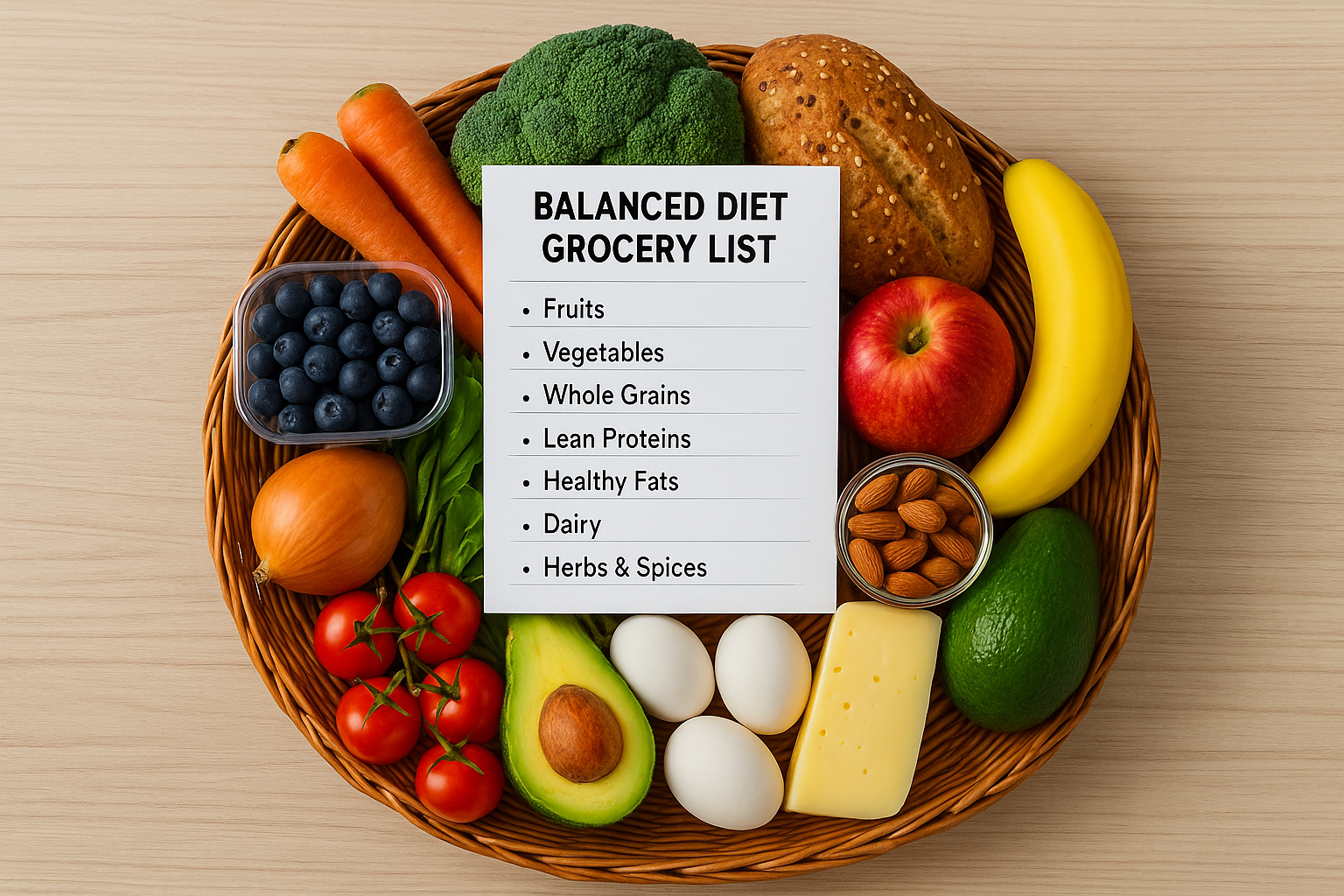
Eating healthy starts with what you put in your grocery cart. If your goal is to stay fit, energetic, and disease-free, then creating a balanced diet grocery list is your first step toward success. In this guide, we’ll walk you through everything you need to know—from nutrient-rich essentials to smart shopping tips—to make healthy eating easy and enjoyable.
Why a Balanced Diet Grocery List Matters
A balanced diet ensures you get the right amount of carbohydrates, proteins, fats, vitamins, and minerals. Without a plan, it’s easy to pick unhealthy, processed foods during shopping. With a well-prepared balanced diet grocery list, you:
- Avoid impulse buying junk food
- Save time and money
- Ensure nutrient variety
- Maintain consistent healthy eating habits
How to Use This Grocery List
- Plan meals ahead: Decide weekly meals before shopping.
- Stick to the list: Avoid adding unnecessary processed snacks.
- Buy fresh when possible: Opt for seasonal and local produce.
The Ultimate Balanced Diet Grocery List for Beginners
1. Fruits (Vitamins, Minerals, Antioxidants)
- Apples
- Bananas
- Oranges
- Blueberries
- Grapes
- Mangoes
💡 Tip: Buy fresh or frozen; avoid added sugar in canned fruits.
2. Vegetables (Fiber, Vitamins, Phytonutrients)
- Spinach
- Broccoli
- Carrots
- Bell peppers
- Cucumbers
- Sweet potatoes
💡 Tip: Mix colors for maximum nutrient diversity.
3. Whole Grains (Complex Carbs, Fiber)
- Brown rice
- Quinoa
- Whole wheat bread
- Oats
- Barley
💡 Tip: Choose “100% whole grain” labeled products.
4. Lean Proteins (Muscle Health, Satiety)
- Skinless chicken breast
- Salmon
- Eggs
- Lentils
- Chickpeas
- Tofu
💡 Tip: Include plant-based proteins for variety.
5. Healthy Fats (Brain & Heart Health)
- Avocados
- Olive oil
- Nuts (almonds, walnuts)
- Seeds (chia, flax, sunflower)
💡 Tip: Avoid trans fats found in processed snacks.
6. Dairy or Dairy Alternatives (Calcium, Vitamin D)
- Greek yogurt
- Low-fat milk
- Almond milk (unsweetened)
- Cheese (moderation)
7. Herbs & Spices (Flavor & Health Benefits)
- Garlic
- Turmeric
- Black pepper
- Cinnamon
Smart Grocery Shopping Tips for Beginners
- Shop the perimeter: Most fresh and healthy foods are around the outer aisles.
- Check labels: Avoid high sugar, sodium, and saturated fats.
- Buy in bulk: Whole grains, beans, and nuts can be more affordable this way.
Internal Link Suggestions:
- How to Build a Balanced Meal Plate: Step-by-Step Guide
- Top 10 Balanced Diet Foods for Boosting Energy Levels
Outbound Link Suggestions:
- Harvard School of Public Health – Healthy Eating Plate
- American Heart Association – Healthy Eating Basics
FAQs
Q1: What should a beginner focus on when making a balanced diet grocery list?
A: Focus on variety—fruits, vegetables, whole grains, lean proteins, and healthy fats.
Q2: Can I make a balanced diet grocery list on a budget?
A: Yes, buy seasonal produce, bulk whole grains, and use frozen veggies.
Q3: Should processed foods be avoided completely?
A: Limit them; choose minimally processed options when possible.
Q4: How often should I update my grocery list?
A: Weekly, based on seasonal foods and changing needs.
Q5: Is it better to buy organic?
A: Organic is good for certain items, but focus more on eating a variety of fresh produce.
Conclusion
A balanced diet grocery list is your foundation for healthy eating. By stocking your kitchen with nutrient-dense, versatile foods, you make it easier to prepare healthy meals every day.
📢 Call to Action: Share this article with friends and check out our other healthy eating guides on Healthwend.com!